
From Solo Writing to Shared Thinking: How Collaboration Changed Everything
06 July, 2026Over the past couple of years, I’ve been slowly reinventing myself as a writer. Writing was very much part of my academic career, but academics write to inform peers, often to prove a point, whereas authors write to engage people and guide readers on a journey. In achieving the latter, I was under no illusion that this meant I needed to relearn how to write to make my ideas more accessible, less formal, and more conversational to reach my intended audience, i.e., freelancers, solo entrepreneurs, startups and small business owners.
Writers are often told to write what they know, and I thought I knew a great deal about professionalism and working relationships that underpin it, having researched it for over 20 years. But the moment I began writing my first book, Professionalism Matters, I came to the realisation that what I thought was solid knowledge turned out to be a collection of assumptions I’d never examined outside of the context of health and social care.
So, I began gathering ideas from people in my business network, looking for real‑world examples that would help me express my ideas more powerfully. My readers loved this approach, and it proved its value. So, it made perfect sense to use the same method for my second book, Professional Collaboration Matters. After all, you can’t credibly write a book about collaboration without collaborating.
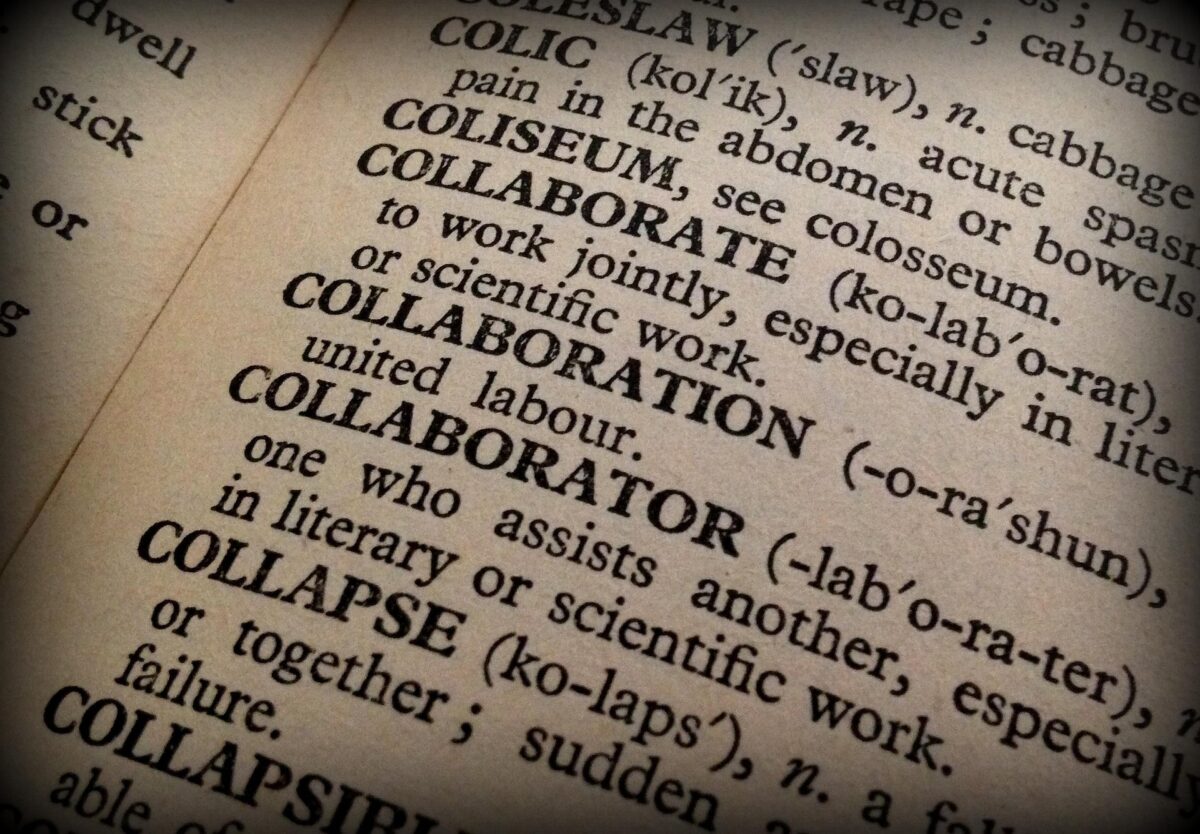
I approached this book with the confidence of someone who’d done it before, only this time, because I was writing about collaboration, I became far more attuned to how it unfolds. The subject forced me to live the process, not just write about it, which made the work feel more personal and relatable.
In both books, I stayed true to my writing style and research methods, but the conversations I had transformed the work. The process didn’t change, yet the people I spoke with changed the book and, in many ways, changed me too.
Firstly, other people’s insights and viewpoints introduced ideas and themes I had not previously considered.
This information challenged my assumptions, redirected me, opened new angles, and meant I began writing in response to questions different from the ones I had started with. Sharing discussions expanded my perspective, clarified my approach, and sharpened my reasoning. This not only influenced the book’s structure and content but also transformed how I thought and presented examples.
Writing became an iterative rather than linear process; chapters evolved as insights emerged. The book became far more nuanced, shaped by others’ broader insights, making it possible to situate it within a business context. Through shared thinking, I not only gained good ideas but also developed better ones that transformed my writing skills, the book’s nature and relevance.
Secondly, those I interviewed believed in me long before the words were on the page, and that trust deepened as the process went on.
Interviewees shifted from being sources to being contributors. Our shared intelligence advanced the work from a personal goal to a shared ambition, fostering a stronger sense of mutual respect and collective ownership.
Embracing others’ perspectives raised the standards I set for myself. When individuals shared their experiences, confided in me and entrusted me with their viewpoints, it inspired me to pursue higher aims. I became accountable to my contributors, which heightened my level of investment in the work. For example, I made a more conscious effort in my preparation, listened more attentively, and became more curious and productive. And, knowing I would be seeking their honest feedback as I shared completed chapters with them, I behaved with more humility.
What was interesting was that once people saw their words reflected in my writing, the relationship shifted: they were no longer outside the process but very much part of it. Contributors engaged with and invested in it because they began to value my strengths, as reflected in the quality of the output. With a clear sense of what it takes to write a book, contributors increasingly trusted my ability and championed my work. As a result, they dedicated effort to help me overcome setbacks, strengthen my resilience, ensure its success, build momentum, and create a community in which contributors took an interest in one another.
Thirdly, as feedback sharpened my thinking and approach to writing, the process of reading chapters similarly prompted growth and change within my contributors.
For many, reading not only validated existing good practices; it also led them to acquire new knowledge and gain insight into alternative perspectives, prompting them to reflect and set out on a course of action towards more effective ways of being and collaborating. This was great because it shows me that the book is doing what it is intended to do. Not only was it informative and inspiring, but it also promoted change in attitudes, values, and behaviours.
In essence, Professional Collaboration Matters moved from a solo project to a living, breathing, shared, and creative collaboration that didn’t just produce better work; it produced better versions of ourselves.
That journey reflects the book’s core message: Collaboration changes our mindset, our behaviour, our attitudes, our relationships, our system, our productivity and efficiency, as well as our confidence and ambition.
Collaboration makes us more intentional, focused, strategic, accountable, disciplined, and adaptable. It allows us to stretch ourselves mentally and creatively, so we move from thinking about ideas to thinking of possibilities. Through it, we learn to build and navigate relationships and to develop patience and perspective. It encourages us to invest in each other’s growth and empowers us to embrace change, manage risks, and seek support.
Ultimately, collaboration is a developmental journey that transforms us into professionals who are not only more skilled but also more connected, capable, and confident, enabling us to work together with greater impact and accomplish great things that make a difference to others.
However, that is just part of the story, because collaboration is not just about the tangible benefits. It is underpinned by processes and relational dynamics, which is why Professional Collaboration Matters was written. Our level of professionalism throughout the process determines development and outcomes.
Working towards shared goals, creating something of value that enables collective growth and success, starts with building strong relationships. Professional Collaboration Matters exists to help us do just that. At the same time, the book enhances our understanding of how collaboration works, clarifying the role of each stage in the process and how these stages contribute to sustainable business growth and success. It also highlights our part in this process through the attitudes, values, and behaviours we adopt, which influence working practices, shared expectations, and standards. This understanding enables us to contribute effectively within a world that is often complex and rapidly changing.
As a book, Professional Collaboration Matters stands as both a definitive guide to business collaboration and a testament to the power of collaboration itself.
Copyright- Dr Cheryl Whiting – July 2026